Ilex opaca
American Holly is the most abundant evergreen tree in the Ashley Schiff Nature Preserve. It is deeply connected to the ecological community. The flowers attract pollinators, insects feed on leaves, and birds eat those insects. Cardinals, thrushes, and woodpeckers eat the berries. Sapsuckers feed on the bark.
European Holly is a popular ornamental imported because of its shiny leaves and long-lasting berries. That so many berries remain on the tree all winter demonstrates how little the European Holly is connected to the ecological community we have placed it in.
Leaves and Bark
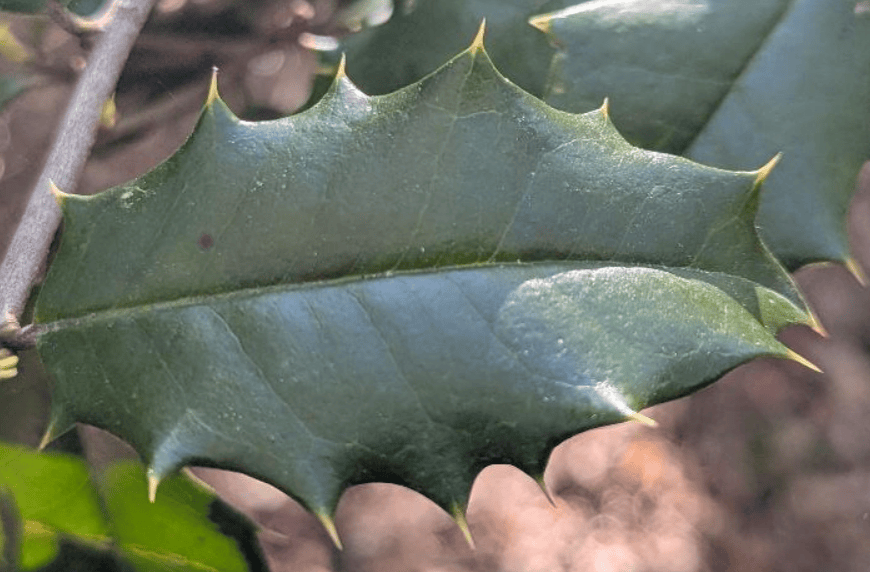
Leathery elliptical leaves are bordered by short, sharp spines. They are dull, dark green above and lighter below.
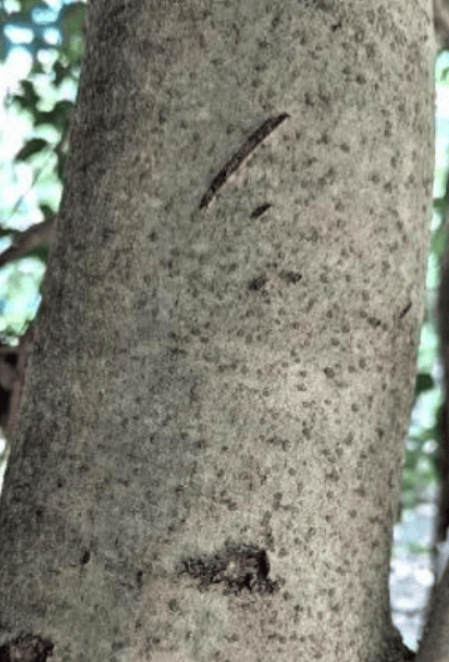
The thin American Holly bark is light gray-brown and often covered with lichen. It can be smooth or slightly knobbly.
Most American Holly trees in the Ashley Schiff Nature Preserve are short shrubs, but they can grow to 40 feet.
Flowers and Fruits
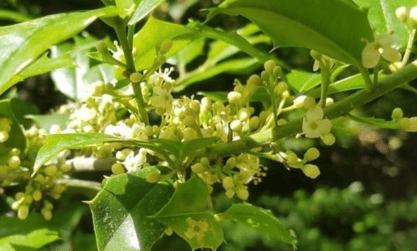
Small white flowers open along branches in late May and early June. Female flowers occur singly or in as much as a group of three along branches. Male flowers appear in clusters.
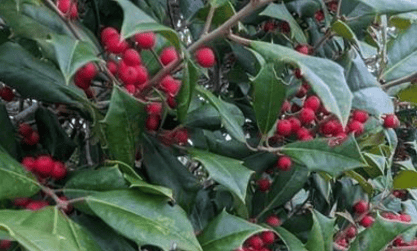
Female flowers develop into red fruits that can feed birds all winter, or until the last one is eaten! They occur singly or in clusters of up to three berries.