
Acer rubrum
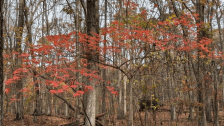
Red Maple (also known as Swamp Maple or Scarlet Maple) is an integral member of the Ashley Schiff Nature Preserve ecological community. Insect larvae feed on the leaves, and both migrating and resident birds feed on those larvae. Birds and mammals not only eat their seeds after they drop in June, but also feed on their buds in the winter. Maple syrup can be sourced by tapping the Red Maple tree, although the tapping season is short because the Red Maple’s early dormancy break negatively affects the taste.
Dormancy is a period in an organism’s life where growth and development halt temporarily to conserve energy. This can mean the complete stop of development or a slowing of development. Red Maple trees enter early dormancy due to weather typically in our region, but an early dormancy break is generally a survival response to environment or stress.
Leaves
Red maple leaves are palmate (like a palm) and symmetrical, with three prominent lobes and two smaller lower lobes. Their edges are gently serrated.
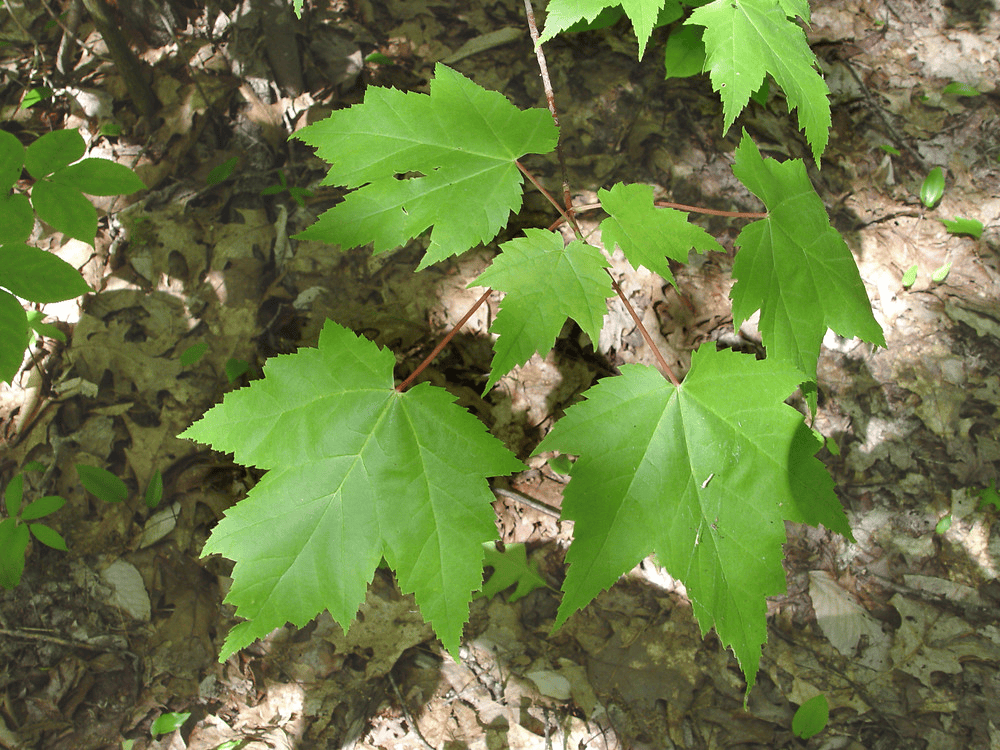
The leaves appear after the tree finishes flowering in the spring. Sometimes the seeds are almost fully formed before the leaves emerge.
Flowers and Seeds
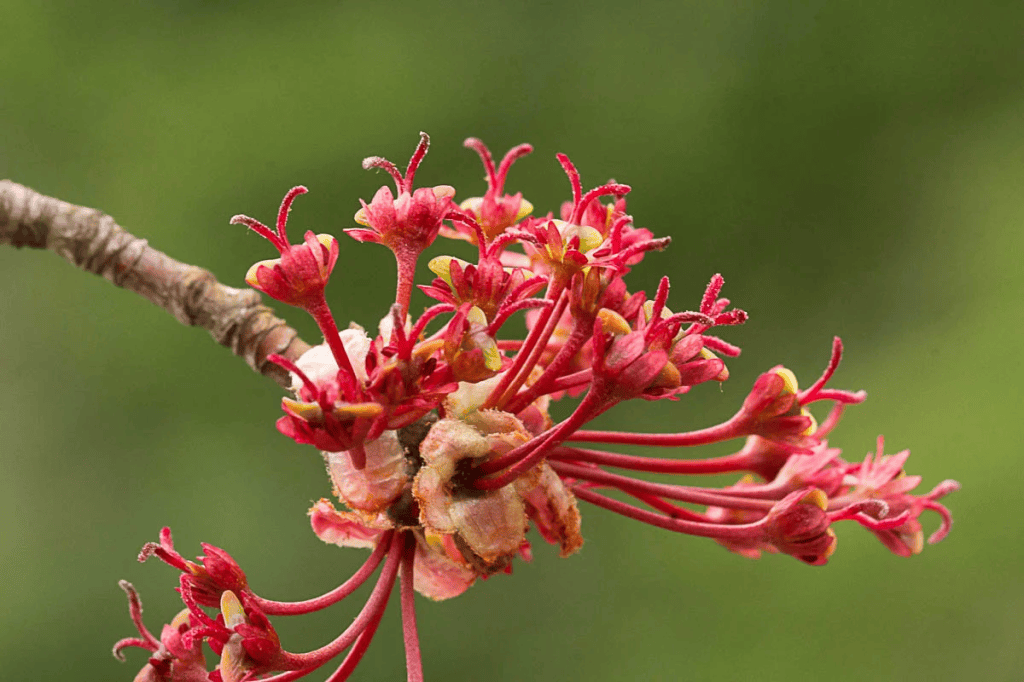
Red Maple trees bloom very early in the spring. The trees are (mostly) either male or female. The female flowers are deep maroon. Male flower petals are red, but the yellow stems on the stamens make the flowers look close to orange.
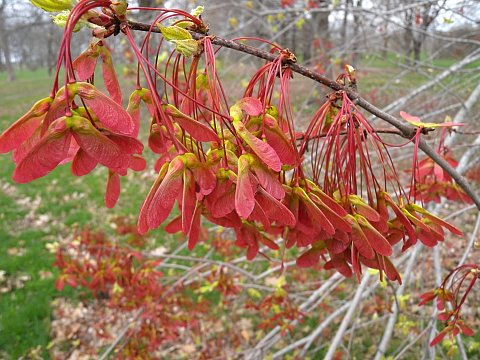
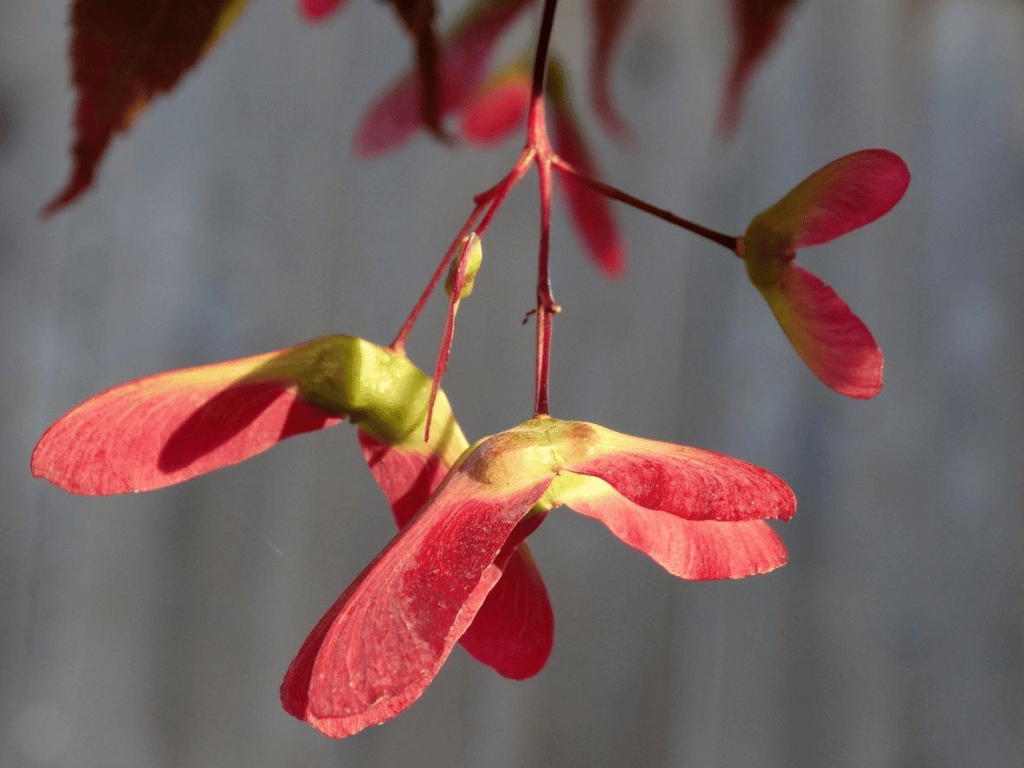
The female flowers lengthen into brown or red-tinged winged seeds called samaras. The seeds ripen and drop in early summer.
Younger Bark vs. Older Bark
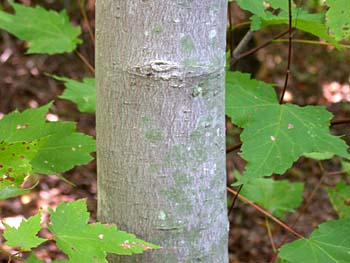
Like most young trees, the light gray-brown bark of young Red Maple trees is smooth. The bark develops mostly vertical cracks as the trunk expands.
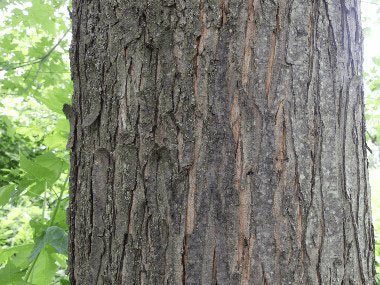
The cracks increase as the tree grows. Darker gray-brown bark of a mature Red Maple tree is divided into thin, shaggy horizontal strips.
Want to learn more about Red Maple?
Lady Bird Johnson Wildflower Center
Illinois Wildflowers (includes tables of insects and birds associated with Red Maple!)

