Betula Lenta
Sweet Birch (also known as Black Birch, Cherry Birch, and Mahogany Birch) is an integral member of the Ashley Schiff Nature Preserve ecological community. The leaves are host to dozens of species of insect larvae, which are food for both migrant and resident birds. In winter, flocks of American Goldfinches feed on the seeds. Sweet Birch was used historically as a source of wintergreen oil, which is now produced synthetically.
Leaves
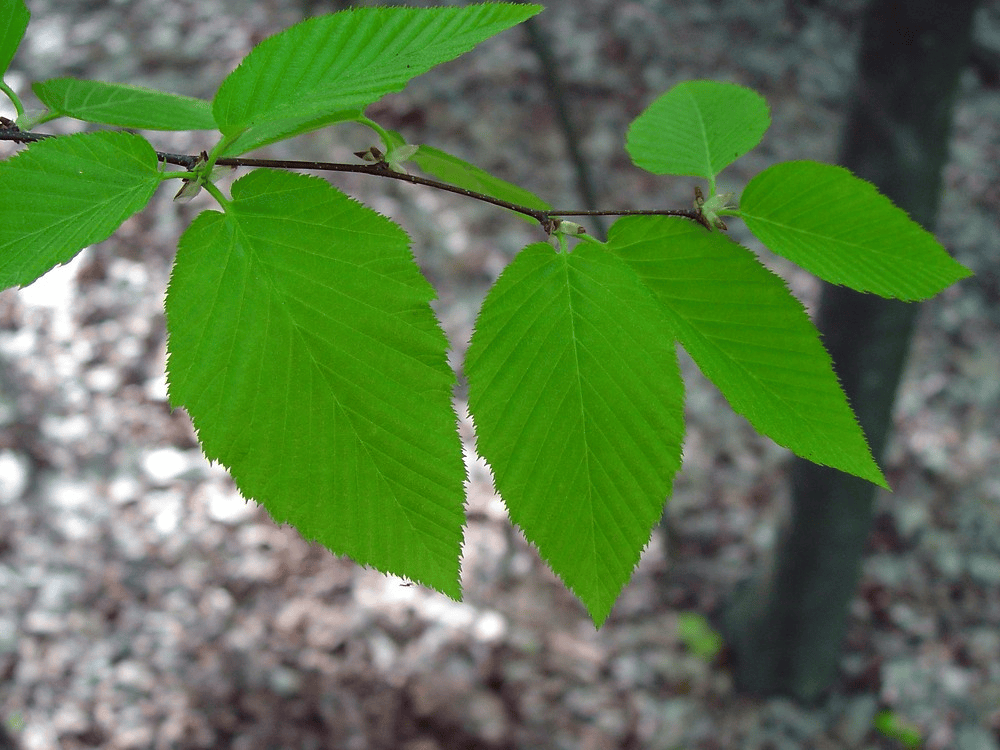
Sweet Birch leaves are bright green, elliptical with a pointed tip, serrate margins, and a heart-shaped base. A close look reveals two levels of serration. Sweet Birches are one of the first native trees in the forest to leaf out in the spring, and one of the first to drop their leaves in the fall.
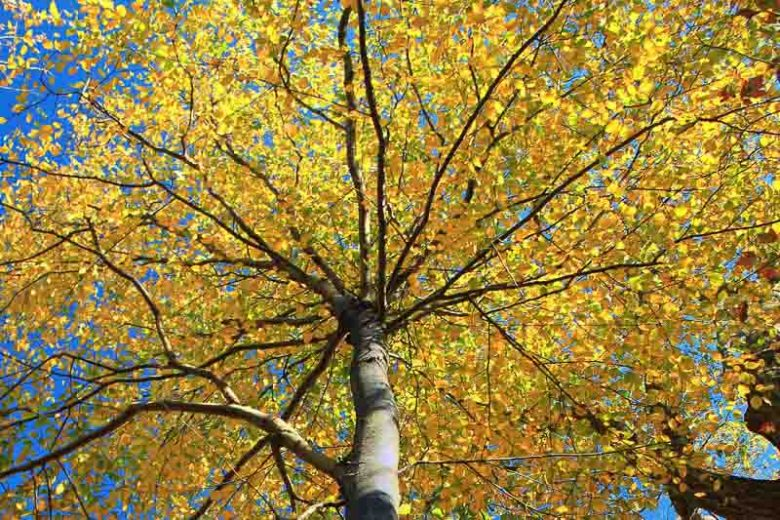
When the forest lights up with sunny yellow leaves in early autumn, we see how plentiful Sweet Birch is here.
Flowers and Seeds
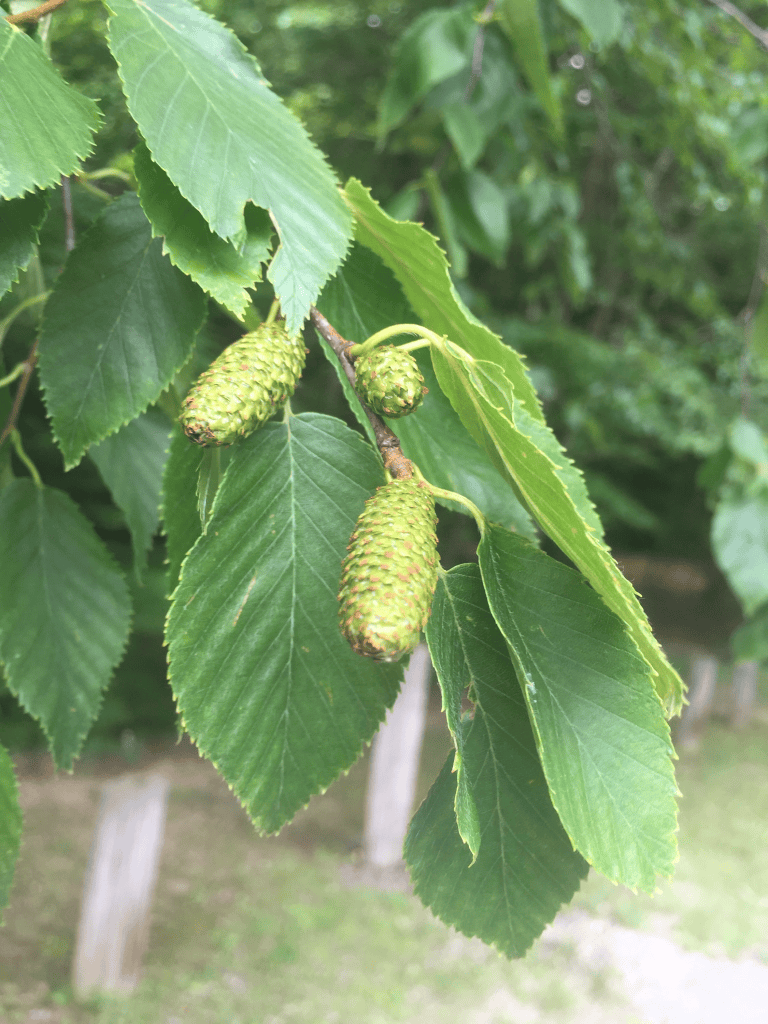
Tiny Sweet Birch flowers appear in the early spring, before the leaves. They look like tiny green cones.
Boughs of Sweet Birch flowers blown down to the ground by spring storms give people a chance to scratch at the branches and smell the characteristic wintergreen aroma.
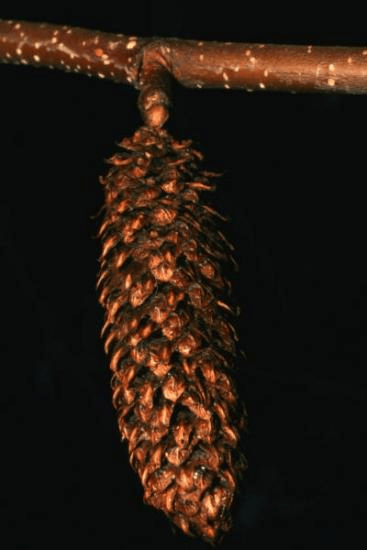
These cone-shaped flowers mature into stacks of tiny winged seeds.
Most seeds are too high in the treetops to see clearly, but storms blow some onto the ground, allowing us a closer look.
Bark
The bark of Sweet Birch has a metallic look. It may be reddish when it is young, but as it ages it becomes more gray. The bark responds dramatically to the growth of the tree.
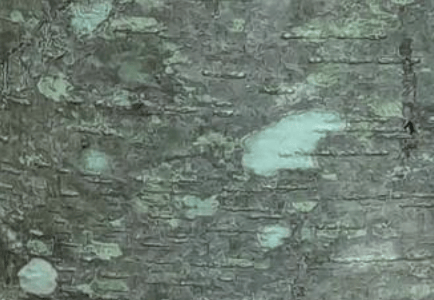
Like all trees in the Betula family, Sweet Birch has prominent, raised horizontal “lenticels” that are visible to the naked eye. Lenticels allow trees to exchange gases with the environment. You could say trees breathe through them!
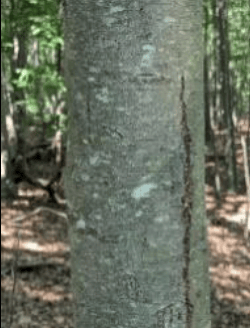
Aside from the raised lenticels, young Sweet Birch bark is smooth. As the core of the tree expands, the bark begins to split into vertical cracks.
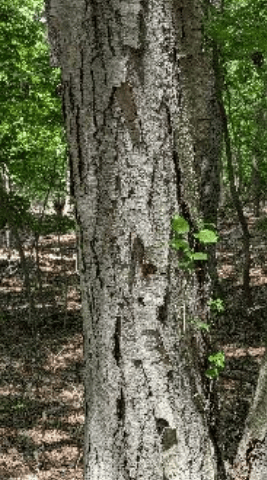
As Sweet Birch ages, the bark accommodates the growth of the tree by breaking up into large plates that lift off from the tree. The horizontal lenticels are still visible.
Diseases
The most dramatically visible disease of Sweet Birch in the Ashley Schiff Nature Preserve is Nectria Canker, caused by a fungus named Neonectria ditissima.
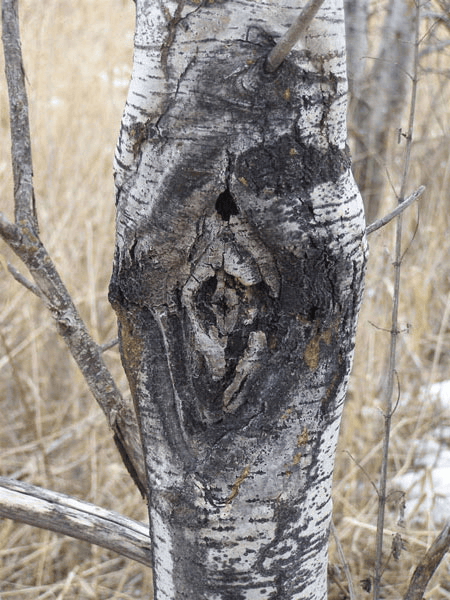
Nectria Canker appears as one or more gaping holes in the bark. The hole, and the swollen-looking bark around are the result of what could be called an arms race between the fungus and the tree.
The fungus arrives on wind-driven rain while the tree is dormant. It enters the tree where a branch broke off, or at other wounds in the bark. During the growing season, the tree tries to contain the fungus with the swollen-looking tissue visible a the edges of the holes in the bark. this cycle will continue until the death of the tree.
Because Sweet Birch and Neonectria ditissima evolved together over millennia, neither tree nor fungus will kill the other. However, the fungus can lead to damage or death of the tree. The wounds cause weak places where the crown of the trunk can be broken due to wind or heavy snow. They can also allow entry to fatal pathogens.

