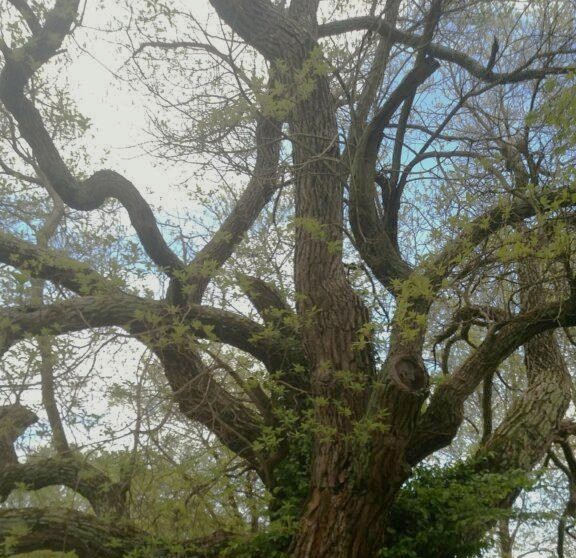
Sassafras albidum
Sassafras can be found everywhere in the Ashley Schiff Nature Preserve. In addition to growing from seed, they spread by underground suckers—so if you see a grove of sassafras trees, they are likely to be one tree! The twigs smell spicy if you scratch or break them. People used to make tea from sassafras, which is no longer recommended because it contains a carcinogen. Sassafras was the earliest source of root beer. Many warblers and woodpeckers eat sassafras fruits.
Leaves
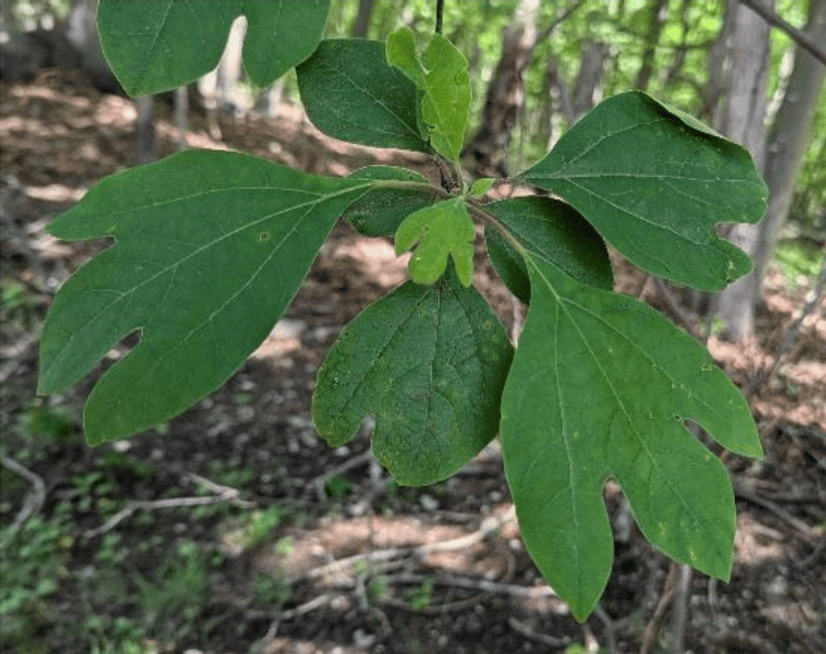
Sassafras come in three shapes! From left to right, the shapes could be described as a hand, a glove, and a mitten. Or possibly a football, a mitten, and a ghost.
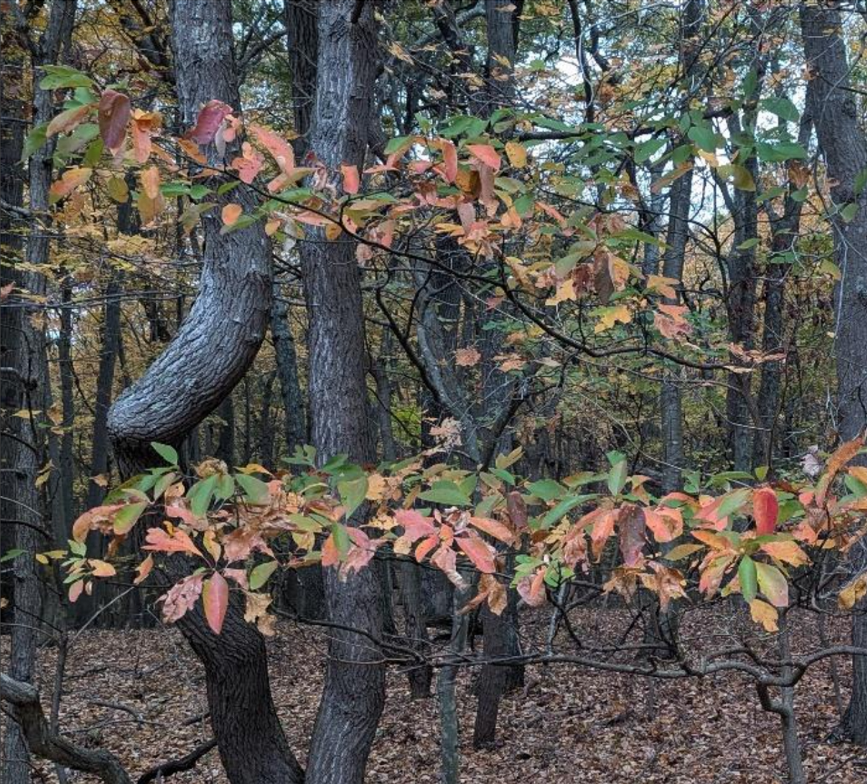
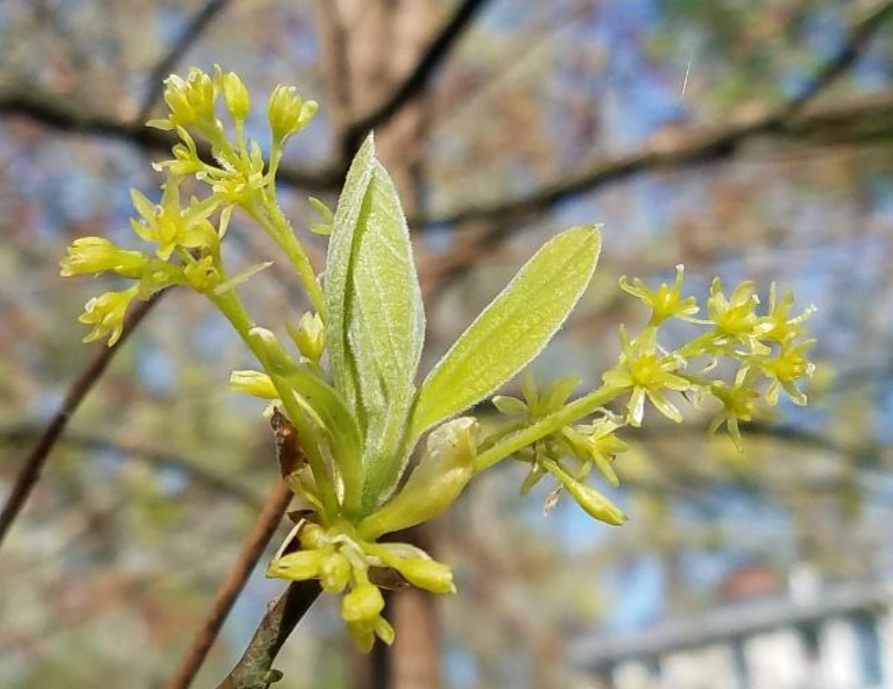
Sassafras leaves open as the flowers mature. In late October, they turn a peach color.
Flowers and Seeds
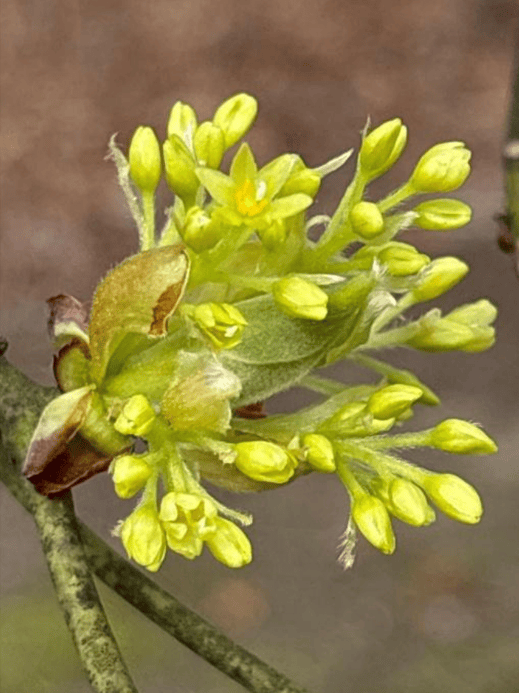
Sassafras flowers open before the leaves. They can appear as little balls of yellow-green if exposed to deer browse.
Younger bark vs. Older bark
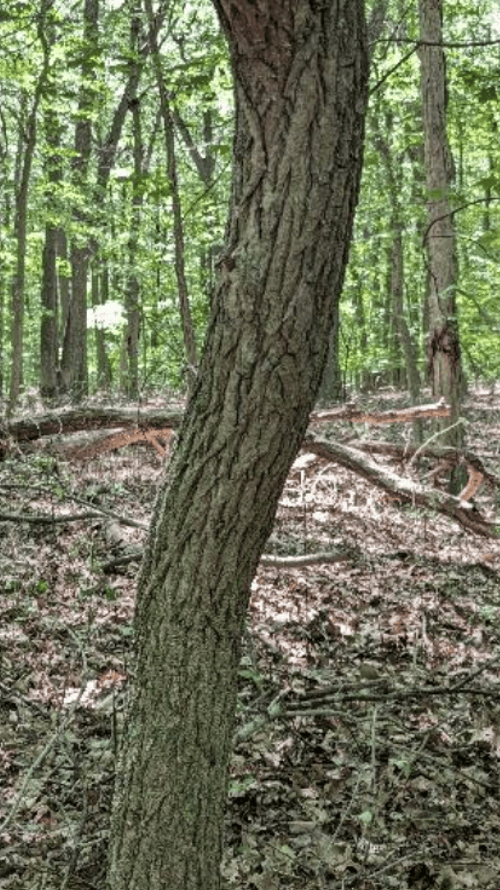
The light brown bark of young Sassafras has a rather bumpy texture. It soon develops characteristic intersecting bocks that have a braided look.
Sassafras bark develops a reddish-brown color as it ages. The intersecting blocks become bigger and deeper.
Sassafras does not handle shade well, so it has evolved to bend any way it must in order to find some sun. they are the most bendy trees in the Ashley Schiff Nature Preserve.
Sassafras leaves are usually all at the very top of the tree.