Quercus coccinea
Scarlet Oak trees are core members of the Ashley Schiff Nature Preserve ecological community. Larvae of many species of insect (including moths and butterflies) feed on Scarlet Oak leaves. Both migratory and resident birds eat those larvae and build nests in the trees. Many insects, birds, and mammals feed on its acorns. Blue Jays and squirrels travel long distances to cache acorns for winter meals, thereby distributing Scarlet Oak seeds far and wide.
Leaves
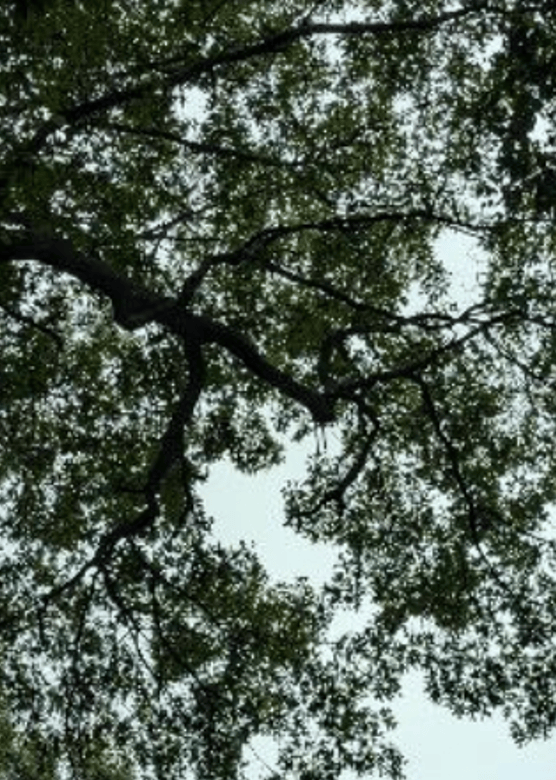
The deep sinuses and bristle-tipped lobes of Scarlet Oaks give them a lacy look. Leaves of Scarlet oaks can be confused for the sun leaves of Black Oaks.
TIP: If you’re unsure whether you’re seeing a Black Oak or a Scarlet Oak, check the leaf shape up and down the tree. Scarlet Oak leaves will have the same lacy look up and own the tree.
The bristles on Scarlet Oak lobes tell us they are in the Red Oak group as opposed to trees in the White Oak group, which have no bristles.
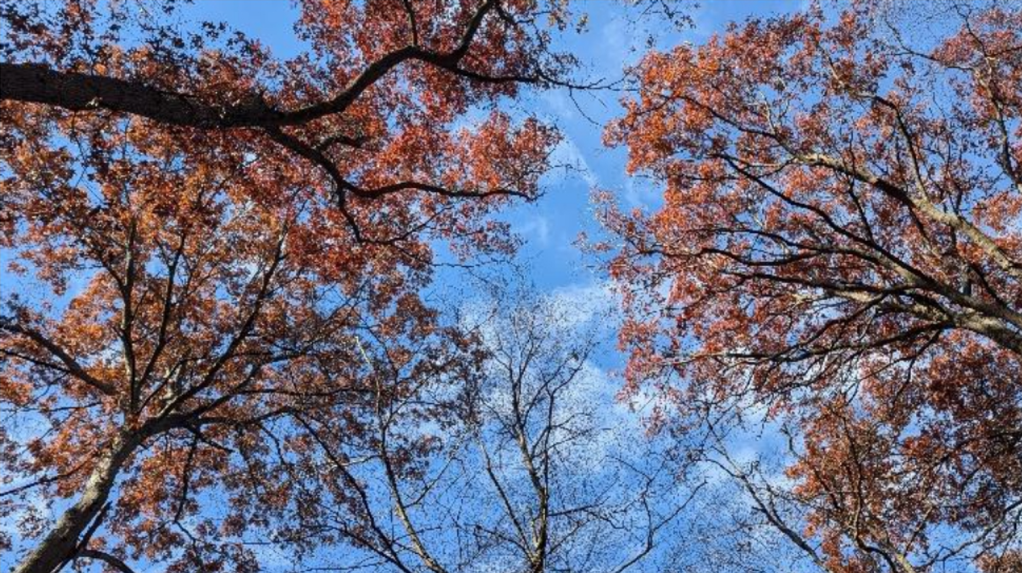
In the fall, you will see why we call them Scarlet Oaks. After all other trees have dropped their leaves, you can see vivid, lacy Scarlet Oaks against the sky.
Flowers and Acorns
Scarlet Oak trees have both female and male flowers. The female flowers are so tiny that they are hard to see. If you see a Scarlet Oak tree at the right time in the spring, you cannot miss the male flowers! The wind can spread the pollen for miles.
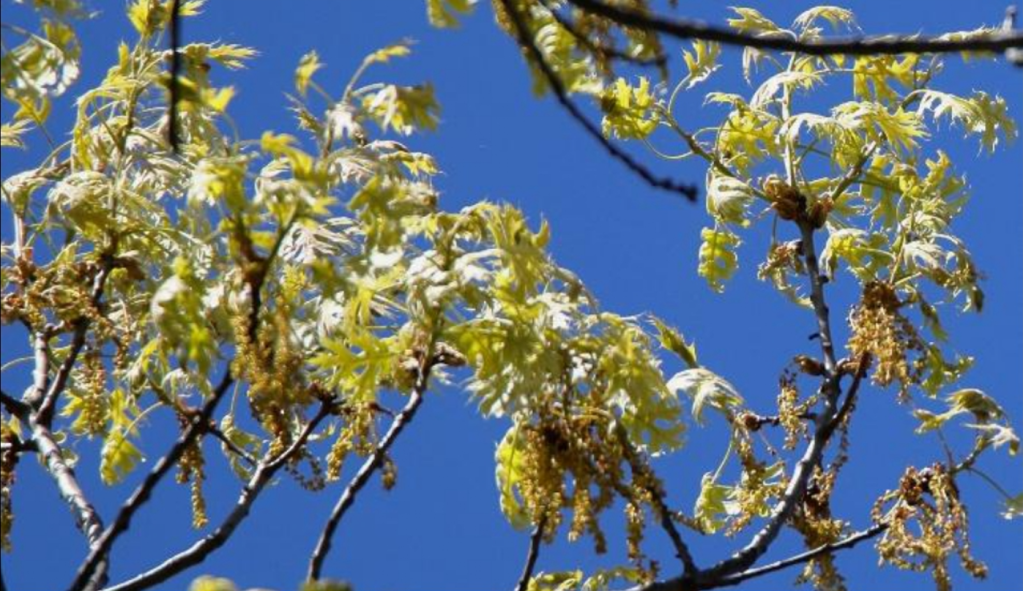
Catkin: slim, cylindrical clusters of small petal-less flowers
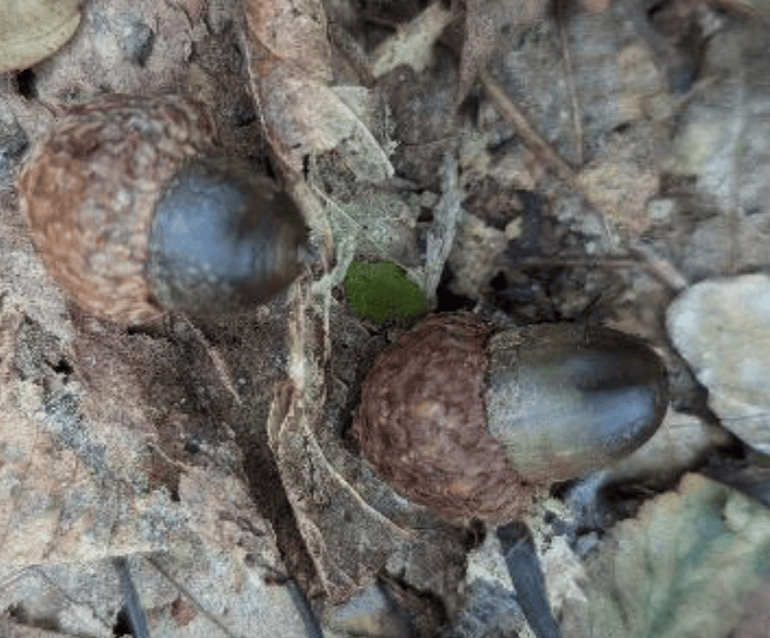
Scarlet Oak acorns are medium long. Their caps are tight and so shiny that they look varnished.
Bark
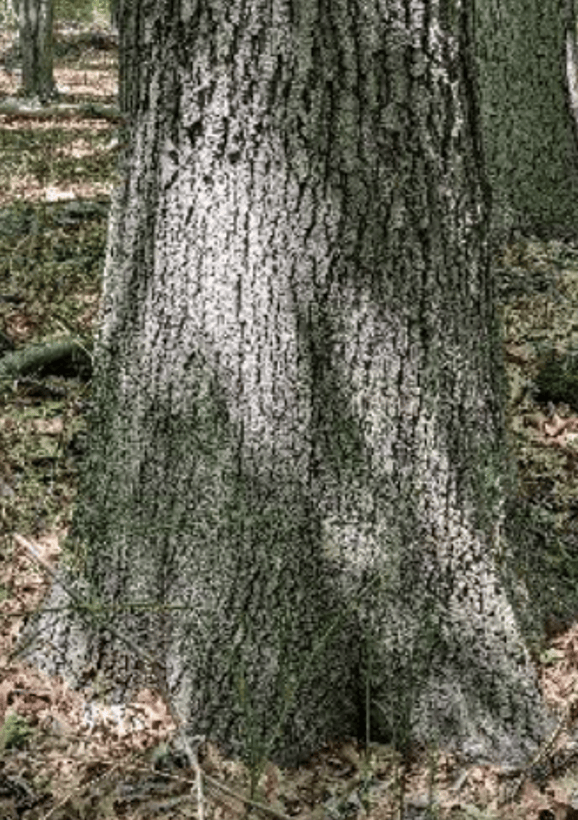
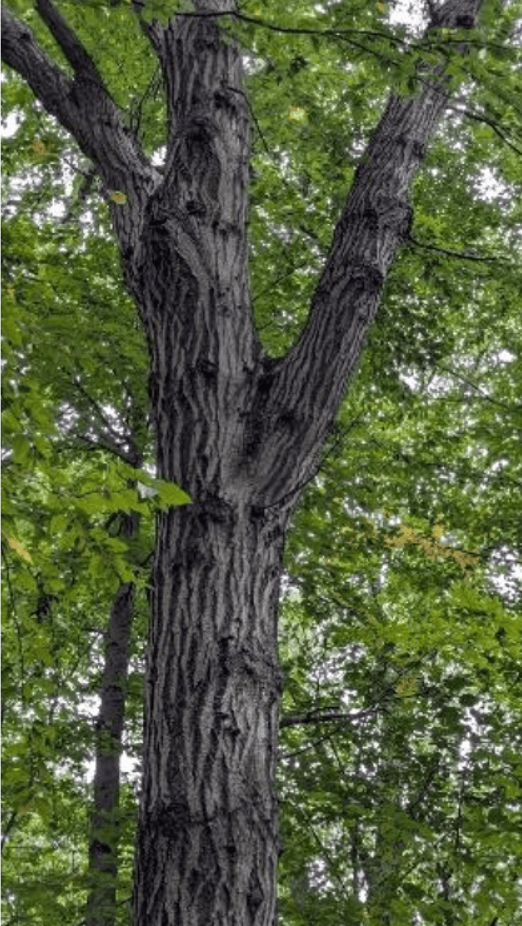
Young Scarlet Oak trees have smooth bark. As the trees grow, reddish cracks appear in the bark. Mature trees have a characteristic stripey look to the upper trunk and branches.
Diseases
A smooth patch on the bark indicates Smooth Patch Disease, caused by a fungus in the genus Aleurodiscus, usually A. oakesii. Because it only feeds on the dead outer bark, it’s not a danger to the tree. However, it could allow a pathogen or insect easy access to the living inner bark.