Quercus alba
White Oaks are integral members of the Ashley Schiff Nature Preserve ecological community. Larvae of hundreds of insect species, including more than 500 moths and butterflies, feed on White Oak. Migrating and resident birds rely on the larvae to sustain their nestlings. The leaves provide cover for bird nests as well as daytime roosting places for bats. Over 100 species of birds and mammals feed on its acorns.
Leaves
Mature White oak leaves are large and very variable. They have up to 9 lobes, which may be wide or narrow. The sinuses between the lobes may be deep or shallow. Unlike leaves of black or Scarlet Oaks, White Oak leaves are smooth and without bristles. This shows they are in the White oak group of oaks, as opposed to trees in the Red Oak group, which have bristled leaves.
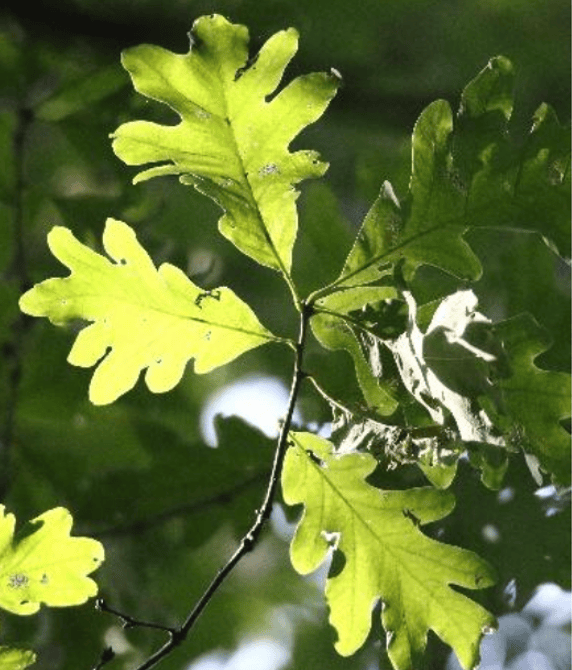
White Oak leaves can turn red or purple in the fall. Dried, brown lower leaves may remain on the tree all winter to protect the tender buds beneath from deer browse.
Flowers and Acorns
White oak trees have both female and male flowers. The female flowers are so tiny that they are hard to see, but if you see a White Oak at the right time in the spring, you cannot miss the male flowers! They are drooping “catkins”. The pollen can travel for miles on the wind.
The acorns of White Oaks are up to an inch long, and mature to brown. Their caps are tight-fitting and bumpy.
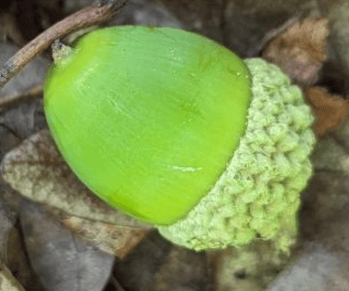
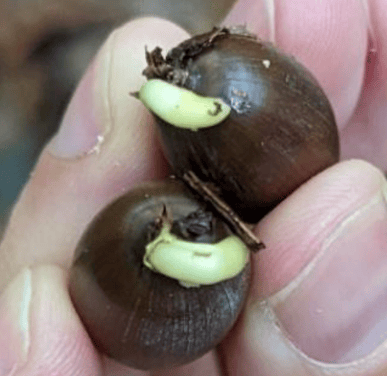
The acorns germinate and try to root soon after they fall.
Bark
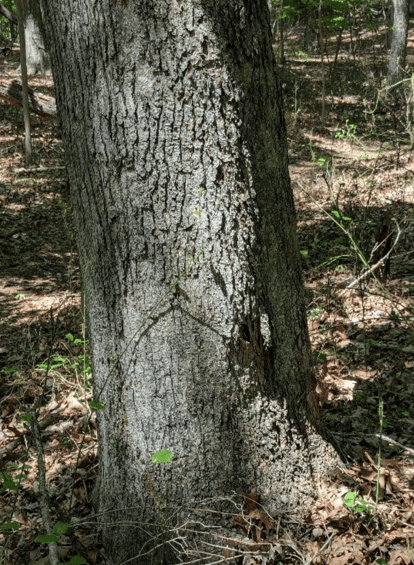
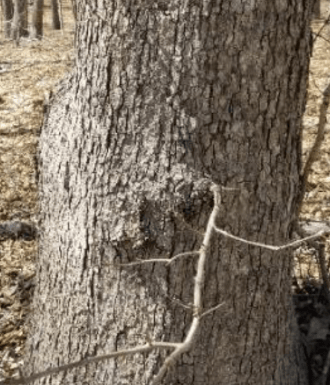
The bark of young White oak trees is smooth. The bark develops its characteristic whitish vertical patches as it ages. Vertical plates develop on older bark.
Diseases
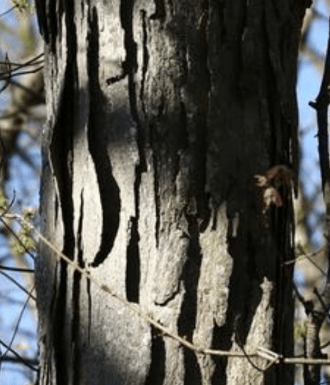
A smooth patch on the bark indicates Smooth Patch Disease, caused by a fungus in the genus Aleurodiscus, usually A. oakesii. Because it only feeds on the dead outer bark, it’s not a danger to the tree. However, it could allow an insect or pathogen easy access to the living inner bark.