Quercus velutina
Black Oak is a core member of the Ashley Schiff Nature Preserve ecological community. Larvae of hundreds of insect species, including moths and butterflies, feed on Black Oak leaves, providing food for both migratory and resident birds. The large leaves provide cover for bird nests as well as daytime roosting places for bats. Many insects, birds, and mammals feed on its acorns. Blue Jays and squirrels travel long distances to cache acorns for winter meals, thereby distributing Black Oak seed far and wide.
Leaves
Black Oak leaves are the largest oak leaves in this forest! They are dark green and shiny on top, but velvety below especially near the veins, and early in the summer.
Black Oak leaf shapes vary according to how much sun they get, and what direction the sun comes from. Shade leaves can be very broad, and have shallow sinuses. Sun leaves can have such narrow lobes and deep sinuses, resembling lacy Scarlet Oak leaves.
TIP: If you’re not sure whether you’re looking at a Black Oak or a Scarlet Oak, check the leaf shape up and down the tree. Black Oak leaves will be asymmetrical. The shade leaves which are typically lower will be broader than the sun leaves.
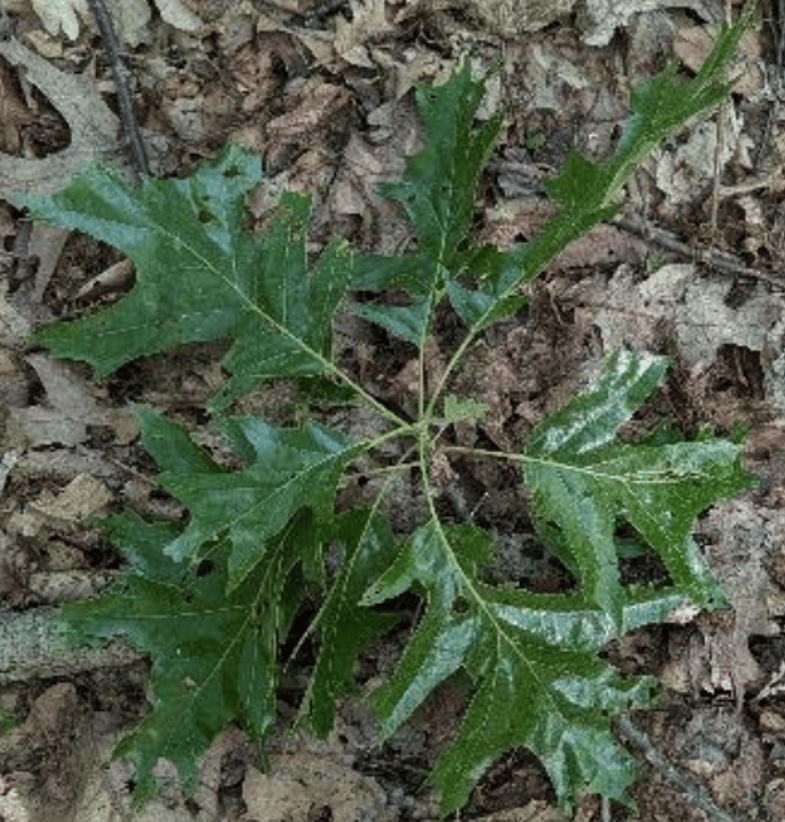
Black Oak petioles, the stems that connect the leaf to the branch, are usually a couple of inches long and bright yellow or yellow-green.
Their lobes have bristles, which show they are in what is known as the Red Oak group. The Red Oak group differs from the White Oak group as the White Oak group has no bristles. If this seems confusing, just admire the bristles and move on.
Flowers and Acorns
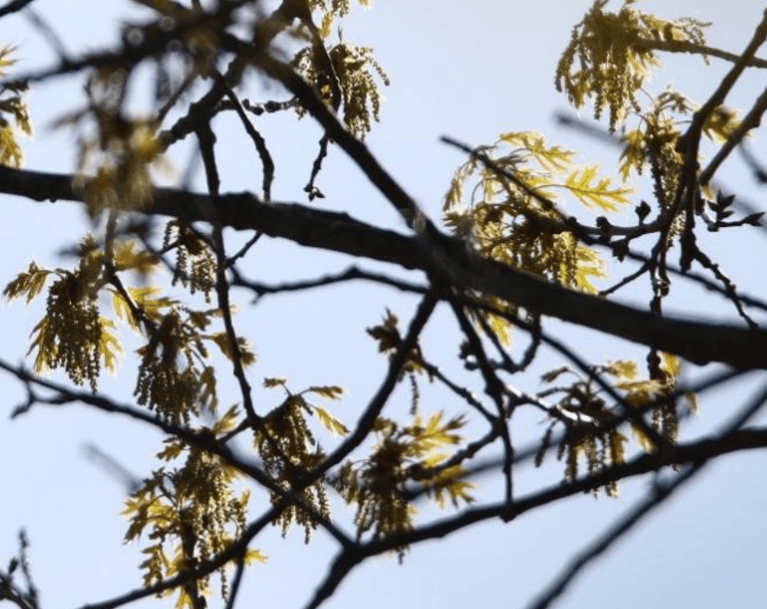
Black Oak trees have both female and male flowers. The female flowers are so tiny that they are hard to see, but if you see a Black Oak at the right time in the spring, you cannot miss the male flowers! They are drooping “catkins”. The pollen can travel for miles on the wind.
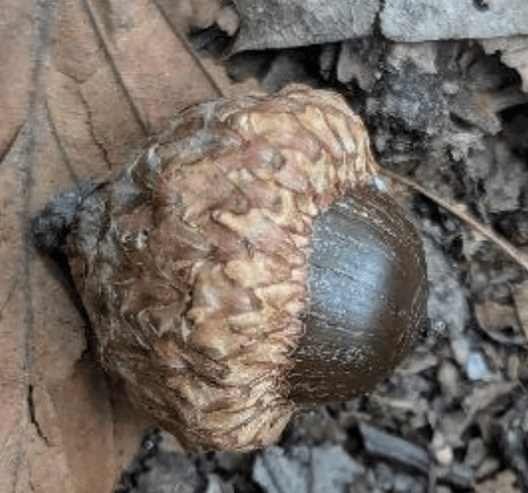
Black Oak acorns look like little heads with mop haircuts. The cap looks shaggy because some ends lift up. The nuts range in size but are always small.
Bark
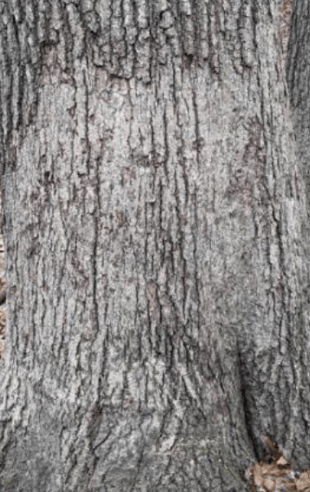
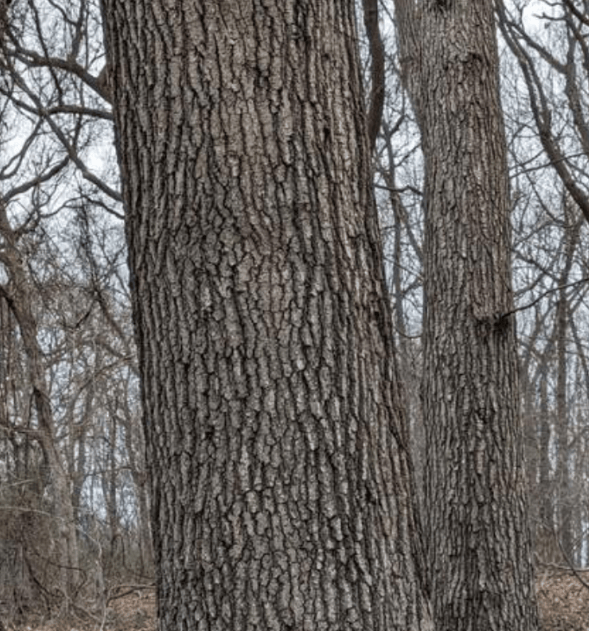
The bark of young Black Oak is smooth. The bark develops its characteristic dark gray, blocky look as it ages.
Diseases
A smooth patch on the bark indicates Smooth Patch Disease, caused by a fungus in the genus Aleurodiscus, usually A. oakesii. Because it only feeds on the dead outer bark, it’s not a danger to the tree. However, it could allow an insect or pathogen easy access to the living inner bark.