Prunus serotina
Black Cherry is an attractive and deeply interconnected member of the Ashley Schiff Nature Preserve ecological community. Pollinators of all sorts flock to the showy flowers! Larvae of many species of insect—including moths and butterflies—feed on Black Cherry leaves and twigs. Both migratory and resident birds eat the larvae. Birds, such as orioles, grosbeaks, woodpeckers, thrushes, grackles, and cardinals eat the fruits. Mice store pits in their dens to eat over the winter.
Leaves
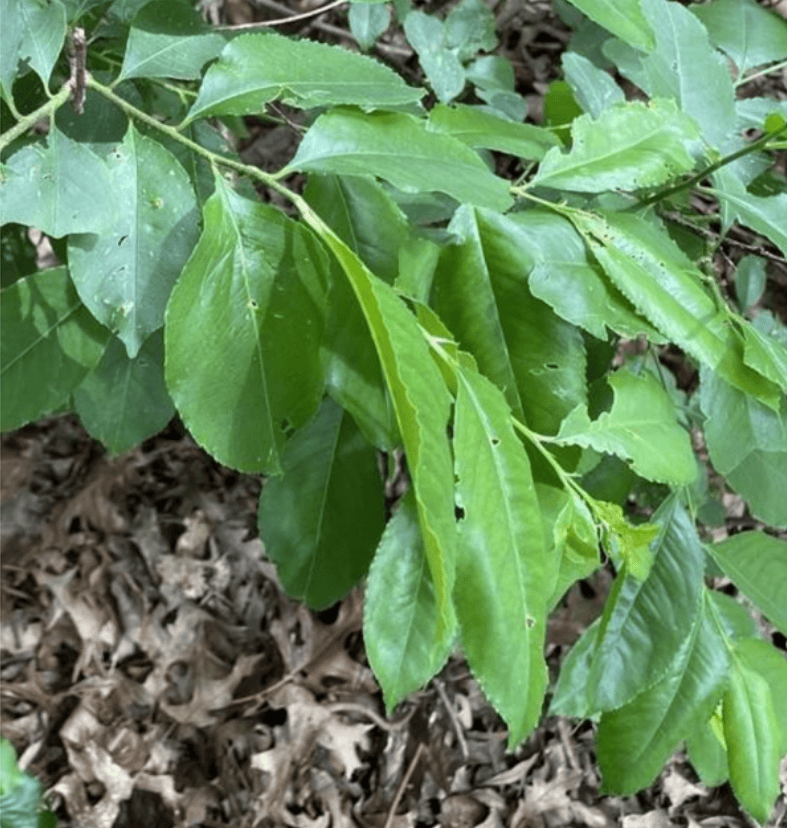
Black Cherry leaves appear early in the spring. They are elliptical, with a broad base and pointed tip. They are shiny above and lighter below. Twigs of Black Cherry have a distinct bitter almond smell when scratched.
Flowers and Fruits
Black Cherry trees flower in June. The round white five-petaled flowers are packed densely along elongated stems at the ends of branches.
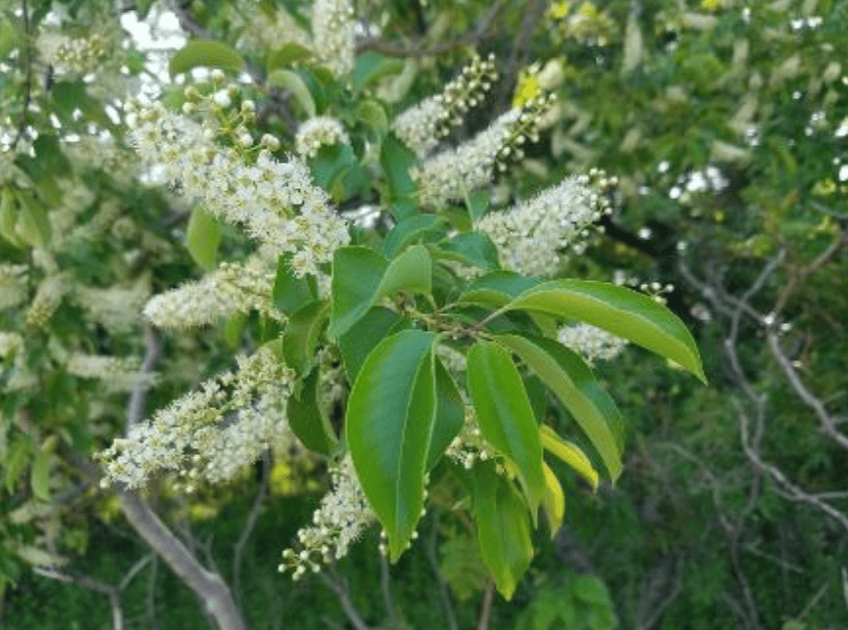
The flowers develop into fruits that feed at least 50 species of birds. Most are eaten when they are red, but a few fully ripen to black!
Bark
You can tell why we call it “Black Cherry” when you see the bark. Very young Black Cherry tree bark has short, raised horizontal lenticles on a smooth reddish-purple surface.
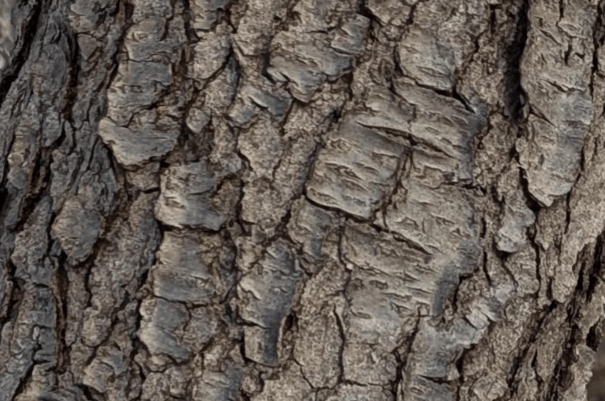
Black Cherry tree bark develops its characteristic scaly plates even when the trunk is still narrow. The crown can be crowded and narrower than it is high.

